


The principle and structure of TPE/TPU products that change color in response to temperature at 31°C
Release time:
26 Sep,2017
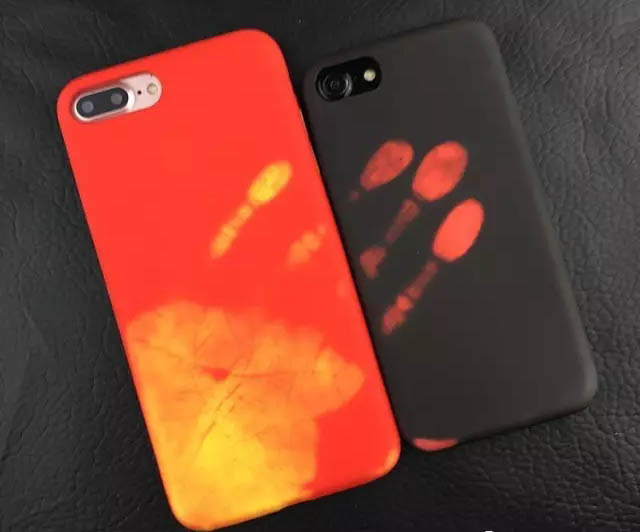
Thermochromic pigments are prepared from electron-transfer-type organic compound systems. Electron-transfer-type organic compounds are a class of organic chromophoric systems characterized by a unique chemical structure. At a specific temperature, electron transfer causes changes in the molecular structure of these organic compounds, thereby inducing color changes. These color-changing materials not only exhibit vivid colors but also enable reversible color transitions between “colored to colorless” states—features that are absent in both heavy-metal complex salt-based and liquid-crystal-type reversible thermochromic materials.
Reversibly thermochromic substances encapsulated in microcapsules are referred to as reversible thermochromic pigments (commonly known as temperature-sensitive pigments, thermochromic powders, or temperature-changing powders). The particles of these pigments are spherical, with an average diameter ranging from 2 to 7 micrometers (one micrometer equals one thousandth of a millimeter). Inside each particle lies the color-changing substance, while the exterior is a transparent shell approximately 0.2 to 0.5 micrometers thick—this shell is neither soluble nor fusible.
1. Basic colors for thermochromic materials: Red, rose red, peach pink, vermilion, orange, tangerine, golden yellow, bright yellow, grass green, green, dark green, medium green, peacock green, sky blue, Turkish blue, blue, deep blue, violet, black, purple
2. Basic temperature for thermochromic color change: 31℃
3. The thermochromic material can repeatedly change color in response to rising and falling temperatures. (Taking red at 31℃ as an example, the color-changing pattern is: colorless above 31℃, and red below 31℃.)
4. The temperature-sensitive color-changing material contains microcapsule-based color-changing particles with particle sizes ranging from 1 to 10 μm, and these capsules exhibit enhanced properties such as high-temperature resistance and antioxidant capabilities.
5. The design of thermochromic products aims to achieve color changes in response to high-temperature and low-temperature environments. These products are mostly used in series that respond to human body temperature, and can also be employed for anti-counterfeiting purposes.
6. Number of color-changing cycles for thermochromic materials: Typically, the number of color-changing cycles for thermochromic series is greater than 4,000 to 8,000 cycles.


Quick Navigation
Contact Us
No. 428, Jinbai Road, Jinshan Industrial Zone, Shanghai, China

WeChat Video Channels

WeChat Official Account

TikTok account