


What’s the difference between TPU (thermoplastic polyurethane) and PC (polycarbonate)?
Release time:
25 Sep,2017
What’s the difference between TPU (thermoplastic polyurethane) and PC (polycarbonate)?
The combustion products of TPU (polyurethane) and PC (polycarbonate) materials mainly include smoke, toxic gases, flammable gases, and burning molten droplets. The combustion results for TPU cases and PC cases are shown below:
Comparison of Combustion Between TPU and PC Materials
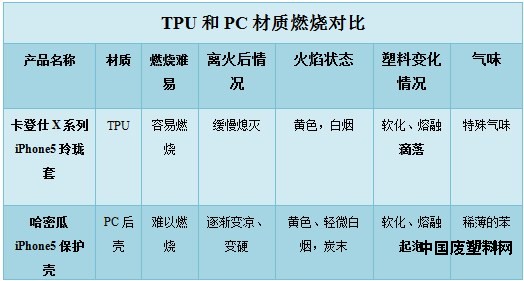
Specifically, polyurethane (TPU) is a highly flammable polymer that emits smoke when exposed to flame, though at relatively low concentrations. This thermoplastic melts and flows when heated, producing combustible molten droplets that give off a distinctive odor. However, the toxic gases generated during the combustion of polyurethane are no more abundant than those produced by commonly encountered nitrogen-containing materials such as wool, acrylic fibers, and synthetic wood. Although this material is flammable, it exhibits good wear resistance during use and has a pleasantly soft yet moderately firm texture.
Polycarbonate (PC) exhibits excellent flame resistance. It begins to soften at temperatures as low as 140°C and melts at 220°C. When burned, it releases pyrolytic gases, the plastic chars and bubbles, producing a faint white smoke with a distinctive odor. From combustion tests, PC material demonstrates superior thermal aging resistance and greater moldability compared to TPU material. However, polycarbonate has poor abrasion resistance; its wear resistance can be significantly improved if it undergoes an anti-slip treatment.
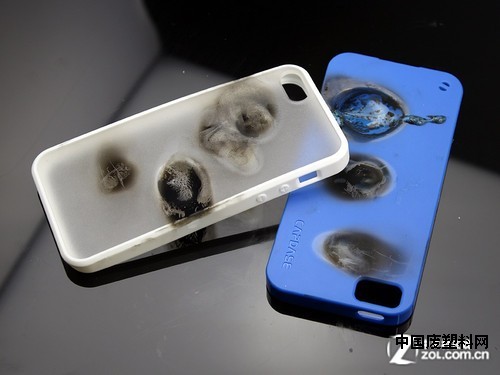
The horrifying aftermath of burning PC and TPU materials.
Overall, under the same testing environment and testing method, PC exhibited the characteristics of a flame-retardant material, with a relatively long ignition time. In contrast, TPU showed highly flammable properties, and its ignition time was significantly shorter than that of the PC case. Therefore, when using TPU protective cases, it’s best to keep them away from sources of ignition.


Quick Navigation
Contact Us
No. 428, Jinbai Road, Jinshan Industrial Zone, Shanghai, China

WeChat Video Channels

WeChat Official Account

TikTok account